
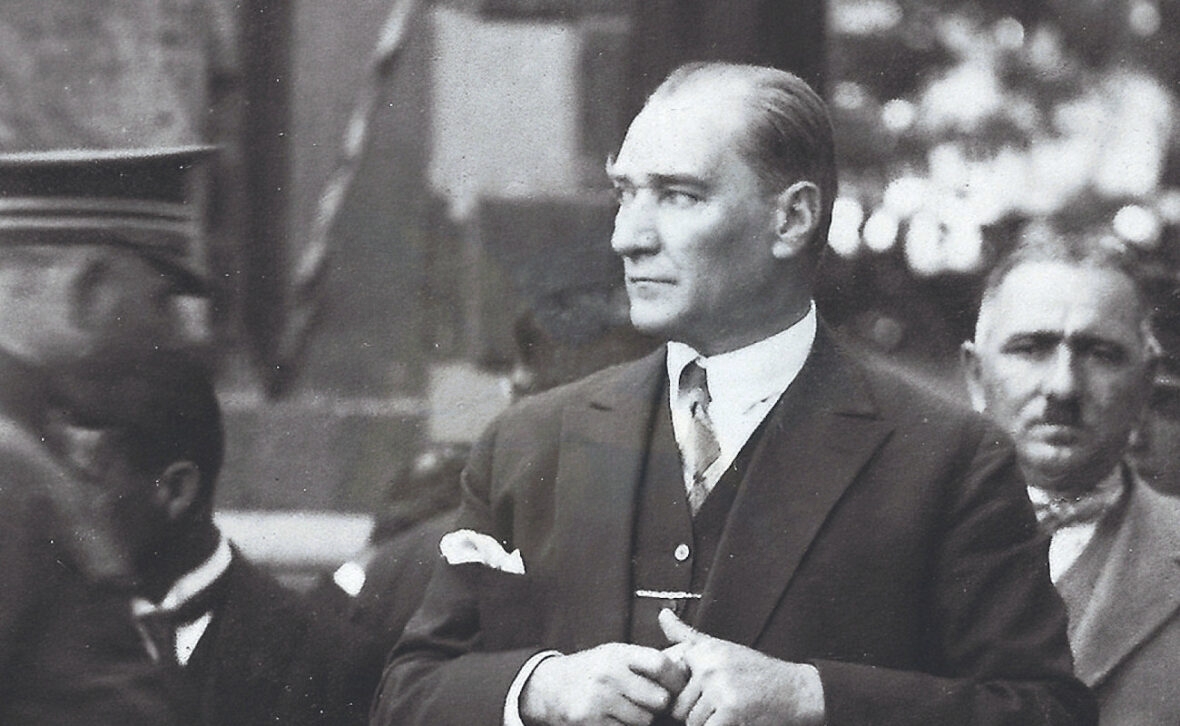
The Reforms of Mustafa Kemal Atatürk
The Reforms of Mustafa Kemal Atatürk represent a significant transformation in the history of Turkey. These reforms were aimed at modernizing the nation and establishing a secular, democratic state following the collapse of the Ottoman Empire. Atatürk, as the founder of the Republic of Turkey, implemented a series of sweeping changes across various aspects of society, including education, law, and culture. His vision was to create a progressive nation that embraced Western ideals while fostering a sense of national identity. Through these reforms, Atatürk sought to empower the Turkish people and promote social equality, ultimately laying the groundwork for a modern Turkish state.
Mustafa Kemal Atatürk is widely regarded as a military genius, a charismatic leader, and a comprehensive reformer. At that time, it was imperative for the Republic of Türkiye to undergo modernisation in order to achieve the level of development exhibited by contemporary civilisations and to become an active member of culturally developed communities. Mustafa Kemal Atatürk is widely credited with having initiated a period of modernisation in his country. Between 1924 and 1938, Atatürk instigated a series of reforms which he regarded as being of paramount importance for the salvation and survival of his people. These reforms were met with widespread enthusiasm by the Turkish populace.
The Reform of the Alphabet…
One of the most important reforms of Atatürk was the abolition of the use of the Arabic alphabet and the adoption of the Latin alphabet. On the 3rd of November 1928, the new Turkish Alphabet was adopted.
The Clothing Reform…
Following the reform of clothing, veils were no longer worn by women; instead, they began to don modern attire. The wearing of hats by men became more prevalent than that of fez-style headwear.
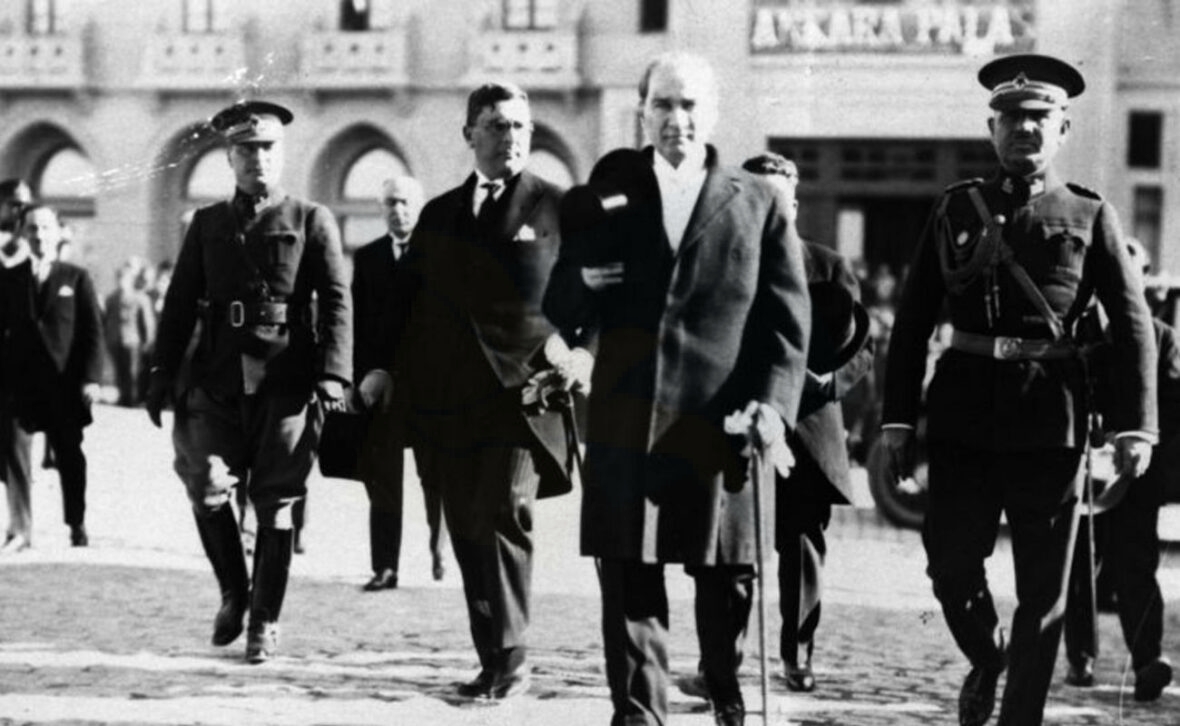
The Reforms: The Secularisation of the Legal System…
The new Turkish state, founded in 1920, required a new legal system. Atatürk adopted the Swiss Civil Code as a substitute for the prevailing Canonical Law (Seriat Hukuku) and, in its stead, introduced the Italian Penal Code of that time. The Turkish legal system has undergone a process of modernisation in accordance with contemporary requirements.
The Secularisation of Education…
Until the beginning of the 19th century, several educational systems were used in the Ottoman Empire. Atatürk observed that the systems used in Muslim seminaries school did not meet the needs of the new society. It was essential to establish a new educational system similar to the western models. Thus, the existing system was changed. In 1933 a university reform was introduced.
The Reforms of Civil Rights for Women…
With the reforms of Atatürk, Turkish women, who for centuries had been neglected, were given new rights. Thus with the civil code passed, Turkish women would now have the same rights as men, could be appointed to official posts, would have the right to vote and to be elected to Parliament.
The monogamy principle and equal rights for women changed the spirit of Turkish society. In all walks of life, Atatürk’s Türkiye has produced tens of thousands of well – educated women who participate in national life as doctors, lawyers, engineers, teachers, writers, administrators, executives, and creative artists. With abiding faith in the vital importance of women in society, Atatürk launched many reforms to give Turkish women equal rights and opportunities.
The new Civil Code, adopted in 1926, abolished polygamy and recognized the equal rights of women in divorce, custody, and inheritance. The entire educational system from the grade school to the university became coeducational. Atatürk greatly admired the support that the national liberation struggle received from women and praised their many contributions : “In Turkish society, women have not lagged behind men in science, scholarship, and culture. Perhaps they have even gone further ahead.” He gave women the same opportunities as men, including full political rights. In the mid – 1930s, 18 women, among them a villager, were elected to the national parliament. Later, Türkiye had the world’s first women supreme court justice.
Atatürk’s Works on Turkish History…
Following the reform of the script, which was meant to be a kind of nationalism in the cultural field, Atatürk concentrated his attention on history. He established the Turkish Historical Society in 1931. Here, Türkiye’s history was thoroughly examined and evaluated.
The New Calendar, Weights and Measures, Holidays and Surname Laws Many other reforms were achieved as well. An example of this is the Weekend Act of 1924, the International Time and Calendar System of 1925, the Obligation Law and Commercial Law of 1926, the System of Measures 1933 and the Surname Act, 1934. According to the law passed by the Grand National Assembly in 1932 Turks took surnames and the Nation’s leader was given the surname of Atatürk, “Father of the Turks”.
The Reforms of Economic Growth…
“In order to raise our new Turkey to the level that she is worthy of, we must, under all circumstances, attach the highest importance to the national economy. “When the Turkish Republic came into being in 1923, it lacked capital, industry, and know – how. Successive wars had decimated manpower, agricultural production stood at a low level, and the huge foreign debts of the defunct Ottoman state confronted the new Republic. President Atatürk swiftly moved to initiate a dynamic program of economic development.
“Our nation,” he stated, “has crushed the enemy forces. But to achieve independence we must observe the following rule : National sovereignty should be supported by financial independence. The only power that will propel us to this goal is the economy. No matter how mighty they are, political and military victories cannot endure unless they are crowned by economic triumphs.” With determination and vigor, Atatürk’s Türkiye undertook agricultural expansion, industrial growth, and technological advancement. In mining, transportation, manufacturing, banking, exports, social services, housing, communications, energy, mechanization, and other vital areas, many strides were taken. Within the decade, the gross national product increased five – fold.
Türkiye’s economic development during Atatürk’s Presidency was impressive in absolute figures and in comparison to other countries. The synthesis that evolved at that time -state enterprises and private initiative active in both industrial and agricultural growth- serves as the basis of the economic structure not only for Türkiye but also in dozen countries.
The New Language…
“The cornerstone of education is an easy system of reading and writing. The key to this is the new Turkish alphabet based on the Latin script.”
The most difficult change in any society is probably a language reform. Most nations never attempt it; those who do usually prefer a gradual approach. Under Atatürk’s leadership, Türkiye undertook the modern world’s swiftest and most extensive language reform.
In 1928, when he decided that the Arabic script, which had been used by the Turks for a thousand years, should be replaced with the Latin alphabet, he asked the experts: “How long would it take?” Most of them replied: “At least five years.” “We shall do it,” Atatürk said, “within five months.” As the 1920s came to an end, Türkiye had fully and functionally adopted, with its 29 letters (8 vowels and 21 consonants), none of the complexities of the Arabic script, which was ill-suited to the Turkish language.
The language reform enabled children and adults to read and write within a few months and to study Western languages with greater effectiveness. Thousands of words and some grammatical devices from the Arabic and Persian held a tight grip over Ottoman Turkish. In the early 1930s, Atatürk spearheaded the movement to eliminate these borrowings. To replace the loan words from foreign languages, a large number of original words, which had been in use in the earlier centuries, were revived, and provincial expressions and new coinages were introduced.
The transformation met with unparalleled success:
In the 1920s, the written language consisted of more than 80 percent Arabic, Persian, and French words; by the early 1980s, the ratio had declined to a mere 10 percent. Atatürk’s language reform—encompassing the script, grammar, and vocabulary—stands as one of the most far-reaching in history. It has overhauled Turkish culture and education.
Strides in Education…
Atatürk regarded education as the force that would galvanize the nation into social and economic development. For this reason, he once said that, after the War of Independence, he would have liked to serve as Minister of Education.
As President of the Republic, he spared no effort to stimulate and expand education at all levels and for all segments of society. Türkiye initiated a most ambitious program of schooling children and adults. From grade school to graduate school, education was made free, secular, and co-educational. Primary education was declared compulsory.
The armed forces implemented an extensive program of literacy. Atatürk heralded “The Army of Enlightenment.” With pencil or chalk in hand, he personally instructed children and adults in schoolrooms, parks, and other places.
Literacy, which had been less than 9 percent in 1923, rose to more than 33 percent by 1938. Women’s education was very close to Atatürk’s heart. In 1922, even before proclaiming the Republic, he vowed: “We shall emphasize putting our women’s secondary and higher education on an equal footing with men.” To give impetus to science and scholarship, Atatürk transformed the University of Istanbul (founded in the mid-15th century) into a modern university in 1933. A few years later, the University of Ankara came into being.
Today, Türkiye has major universities all over the country. Except for Europe and North America, she has one of the world’s highest ratios of university graduates to population.
Culture and the Arts…
Among the prominent statesmen of the 20th Century, few articulated the supreme importance of culture as did Atatürk, who stated: “Culture is the foundation of the Turkish Republic.” His view of culture encompassed the nation’s creative legacy as well as the best values of world civilization.
It stressed personal and universal humanism. “Culture,” he said, “is a basic element in being a person worthy of humanity,” and described Türkiye’s ideological thrust as “a creation of patriotism blended with a lofty humanist ideal.” To create the best synthesis, Atatürk underlined the need for the utilization of all the viable elements in the national heritage, including the ancient indigenous cultures, and the arts and techniques of the entire world civilization, past and present. He gave impetus to the study of the earlier civilizations of Anatolia – including Hittite, Phrygian, Lydian, and others.
Pre-Islamic culture of the Turks
Pre-Islamic culture of the Turks became the subject of extensive research which proved that, long before their Seljuk and Ottoman Empires, the Turks had already created a civilization of their own. Atatürk also stressed the folk arts of the countryside as the wellspring of Turkish creativity. The visual and plastic arts (whose development had been arrested by some bigoted Ottoman officials who claimed that the depiction of the human form was idolatry) flourished during Atatürk’s presidency.
Many museums were opened. Architecture gained new vigor. Classical Western music, opera, and ballet, as well as the theater, took impressive strides. Several hundred “People’s Houses” and the “People’s Rooms” all over Türkiye gave local people and youngsters a wide variety of artistic activities, sports, and other cultural affairs. Book and magazine publication enjoyed a boom. The film industry started to grow. In all walks of cultural life, Atatürk’s inspiration created an upsurge. Atatürk’s Türkiye is living proof of this ideal – a country rich in its own national culture, open to the heritage of world civilization, and at home in the endowments of the modern technological age.